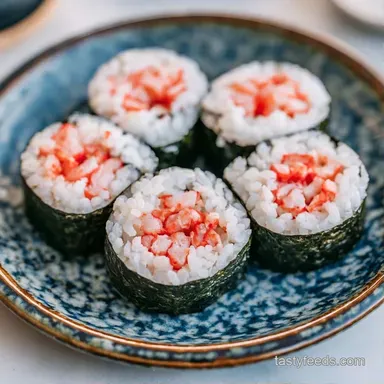
Crab Stick Sushi in 40 Minutes
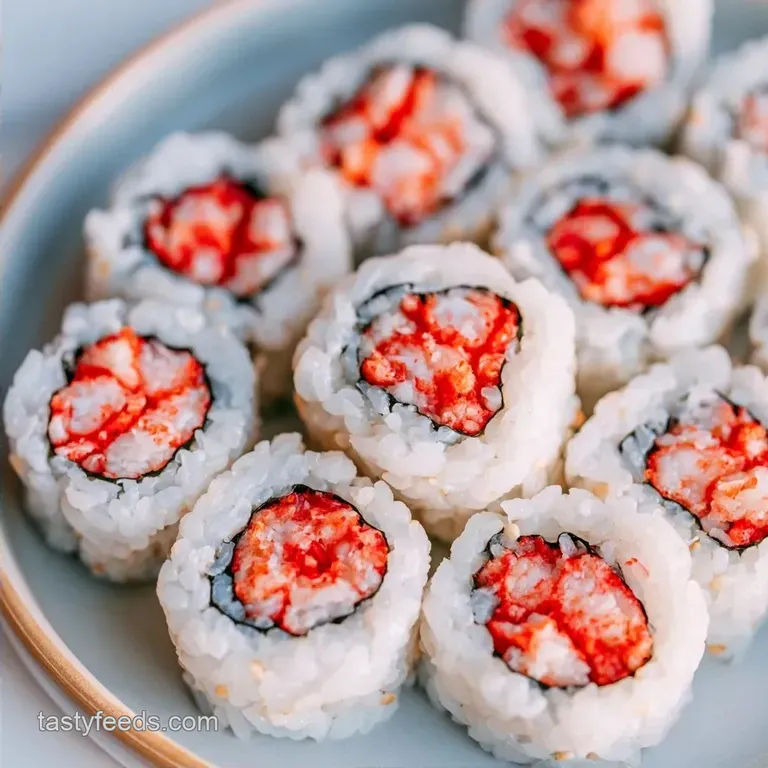
- Time: 20 min active + 20 min cooking
- Flavor/Texture Hook: Creamy avocado and crisp cucumber in a glossy rice wrap
- Perfect for: Beginner friendly dinner or a cheap party platter
- Making Crab Stick Sushi at Home
- Why the Rice Texture Matters
- Ingredient Breakdown and Roles
- Everything You Need to Buy
- Basic Tools for the Job
- The Full Assembly Process
- Fixing Common Rolling Problems
- Troubleshooting Common Issues
- Adjusting the Batch Size
- Sushi Beliefs That Aren't True
- Storage and Waste Reduction
- Mix It Up
- Plating and Serving Tips
- Recipe FAQs
- 📝 Recipe Card
Making Crab Stick Sushi at Home
The sharp, vinegary scent of seasoned rice always hits me first. There is something satisfying about the sound of a damp knife slicing through a tight roll, that light crunch of the nori giving way to the soft center.
I remember my first try where the rice was a gummy mess and the rolls looked like lumpy logs, but you get the hang of it quickly.
You don't need a professional kitchen to get this right. It's all about a few basic moves and not overthinking the process. Most people think they need expensive gear, but a bit of plastic wrap and a steady hand do the trick.
This guide focuses on the most reliable way to assemble Crab Stick Sushi. We will keep the tools minimal and the steps direct so you can actually eat sooner.
Why the Rice Texture Matters
- The Slicing Motion: Folding vinegar into hot rice with a cutting move prevents the grains from smashing. This keeps them distinct and glossy rather than turning into a paste.
- Starch Removal: Rinsing the rice until the water runs clear removes surface starch. This prevents the rolls from becoming too gluey.
| Feature | Fast Method | Classic Method |
|---|---|---|
| Rice Prep | Rice cooker / Pot | Hand washed / Steamed |
| Wrapping | Plastic wrap + Mat | Traditional bamboo mat |
| Rolling Time | 5 minutes | 15 minutes |
| Best For | Busy weeknights | Formal dinner parties |
Ingredient Breakdown and Roles
Since we are keeping things simple, every part of this roll has a specific job to keep it from falling apart.
| Ingredient | What It Does | Best Swap |
|---|---|---|
| Short grain rice | Provides the sticky structure | Medium grain sushi rice |
| Rice vinegar | Adds tang and preserves rice | Apple cider vinegar + pinch of sugar |
| Nori sheets | Holds the roll together | Soy paper for a lighter look |
| Imitation crab | Adds mild sweetness and bulk | Real crab or surimi |
Everything You Need to Buy
Gather these before you start. I recommend getting a small bottle of rice vinegar since you won't use it all at once.
- 2 cups (370g) short grain sushi rice Why this? Essential for the stickiness needed to hold the roll.
- 2 cups (480ml) water
- 3 tbsp (45ml) rice vinegar
- 1 tbsp (12g) sugar
- 1 tsp (6g) salt
- 8 oz (225g) imitation crab sticks, cut into long strips Why this? Cheap, consistent flavor and easy to slice.
- 1 medium (150g) cucumber, seeded and julienned
- 1 large (200g) avocado, sliced into thin wedges
- 4 sheets (40g) Nori seaweed
- 1/4 cup (60ml) soy sauce
- 1 tbsp (15g) wasabi
- 1 tbsp (15g) pickled ginger
Basic Tools for the Job
You don't need a full sushi kit. A bamboo mat is helpful, but you can use a clean kitchen towel covered in plastic wrap. Use a very sharp knife, preferably a non serrated one, to avoid crushing the rice during the final cuts.
Chef's Note: If you don't have a bamboo mat, a flat plastic cutting board and a piece of parchment paper can work in a pinch.
The Full Assembly Process
Follow these steps to keep your Crab Stick Sushi tight and professional.
Phase 1: Preparing the Seasoned Rice
- Rinse the sushi rice under cold water until the water runs clear. Note: This removes the extra starch that causes clumping.
- Combine rice and water in a cooker or pot. Cook 20 mins until fluffy and absorbed.
- Fold in the rice vinegar, sugar, and salt using a slicing motion with a spatula. Do this while the rice is hot until the grains look glossy.
- Allow the seasoned rice to cool to room temperature. Note: Hot rice will wilt the nori and make it chewy.
Phase 2: Assembling the Rolls
- Place a sheet of nori on a plastic wrap covered bamboo mat.
- Wet hands with vinegar water and spread a thin layer of rice over the nori. Leave a 1 inch border at the top.
- Flip the nori over so the rice is facing down on the plastic. Note: This creates the inside out look.
- Lay 2 strips of imitation crab, cucumber, and avocado horizontally across the center.
- Use the bamboo mat to roll tightly. Apply firm pressure until the ingredients form a solid cylinder.
Phase 3: Precision Slicing
- Wipe a sharp knife with a damp cloth between every cut. Slice the roll in half, then into smaller pieces until you have 8 clean segments.
Fixing Common Rolling Problems
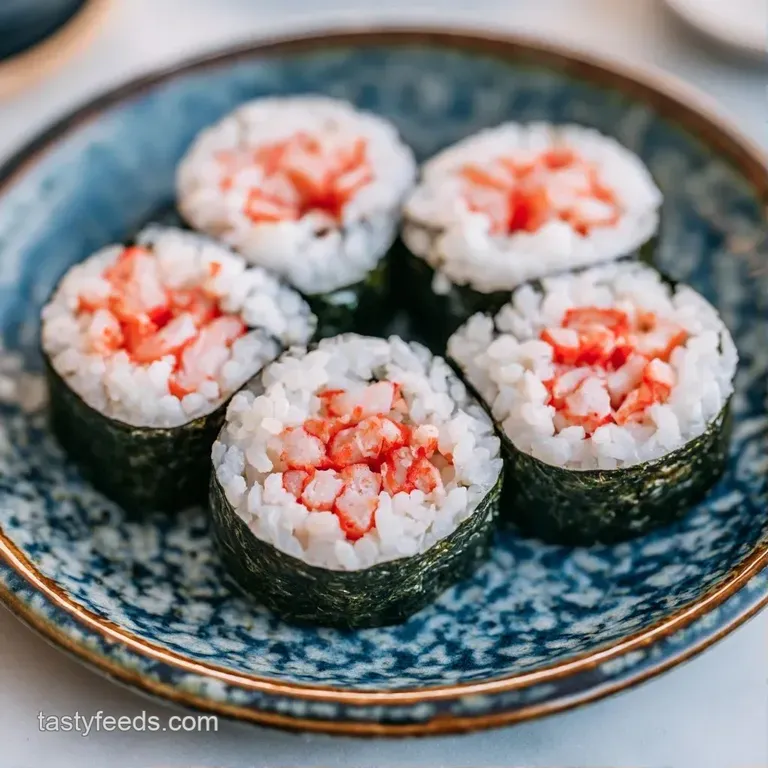
Rolling sushi is a physical skill, not a science. If your Crab Stick Sushi feels loose or looks messy, it usually comes down to one of three things.
Troubleshooting Common Issues
| Issue | Solution |
|---|---|
| Why Your Roll Unravels | This usually happens because you didn't apply enough pressure during the roll or the rice layer was too thin to grip the fillings. |
| Why Your Rice Sticks | If the rice is sticking to your fingers, you aren't using enough vinegar water. Keep a small bowl of water and a splash of rice vinegar nearby. Dip your fingers every time you touch the rice. |
| Why Your Avocado Mushes | Pressing too hard with the knife can squash the avocado. Use a slicing motion rather than pushing straight down. |
Adjusting the Batch Size
If you are making this for a small snack or a big crowd, the ratios change slightly. For those who want a shortcut on the rice, I've shared a Quick Cooked Sushi Rice method that saves time.
Scaling Down (2 Rolls) Use 1 cup of rice and 1 cup of water. Reduce the vinegar seasoning by half. Since the volume is smaller, the rice might cook 20% faster, so keep an eye on it.
Scaling Up (8 Rolls) Double the rice and water. For the seasoning, only increase the salt and sugar to 1.5x the original amount to avoid over salting. Work in batches so the rice doesn't dry out while you roll.
Sushi Beliefs That Aren't True
There are a few myths about making Crab Stick Sushi that stop people from trying it.
The first is that you need expensive, grade A fish to make "real" sushi. In reality, many of the most popular rolls in the US use imitation crab and cooked ingredients.
The second is that you need a professional grade sushi mat. As long as you have something flat and a way to wrap it, the result is the same.
Storage and Waste Reduction
Keep your rolls in an airtight container in the fridge for up to 2 days. Don't freeze them, as the rice will turn gritty and the cucumber will lose its crunch.
To reheat, don't use a microwave. Let them sit at room temperature for 15 minutes so the rice softens naturally.
For zero waste, use the leftover cucumber peels and ends to make a quick pickled salad with some of the remaining rice vinegar and sugar. If you have extra seasoned rice, it makes a great base for a sushi bowl with a fried egg on top.
Mix It Up
Once you've got the basics down, you can change the flavor profile. For those who like a bit of heat, try making Spicy Crab Sushi by adding sriracha to the crab sticks.
- For a Creamy Twist: Add a thin strip of cream cheese alongside the avocado.
- For Added Crunch: Use tempura flakes or toasted sesame seeds on the outside of the rice.
- For a Low Carb Option: Use thin slices of cucumber as the "wrap" instead of rice and nori.
Plating and Serving Tips
Presentation is what makes this feel like a treat. Arrange the pieces in a staggered line on a flat rectangular plate.
Place a small mound of wasabi and a pile of pickled ginger in the corner. This gives the plate color and allows guests to customize their spice level. Pour the soy sauce into a shallow dipping bowl rather than putting it directly on the sushi.
This keeps the rice from getting soggy and preserves the texture of the Crab Stick Sushi until the moment it hits your tongue.
Recipe FAQs
How do you make California rolls?
Spread a thin layer of seasoned rice over nori, leaving a 1 inch border. Add imitation crab, cucumber, and avocado, then roll tightly with a bamboo mat.
What are sushi crab sticks made of?
They are processed fish paste, typically surimi. This white fish is blended with starch and flavorings to mimic the taste and texture of real crab.
Can I eat imitation crab while pregnant?
Yes, as long as it is fully cooked. Most imitation crab is steamed during production, making it a safer alternative to raw seafood.
Are California rolls gluten-free?
No, typically they are not. Imitation crab often contains wheat based starch, and soy sauce usually contains wheat.
How to cut imitation crab for sushi?
Slice the sticks lengthwise into long strips. This ensures the filling is evenly distributed across the roll for a consistent bite.
How to make a California roll taste like real Japanese sushi?
Fold rice vinegar, sugar, and salt into hot rice using a slicing motion. This creates the signature tangy, glossy finish found in professional sushi.
What is the best sushi recipe for most beginners?
The California roll is the ideal starting point. It uses accessible ingredients and teaches basic rolling skills; for a slight twist, try a sesame roll.
Crab Stick Sushi in 40 Minutes