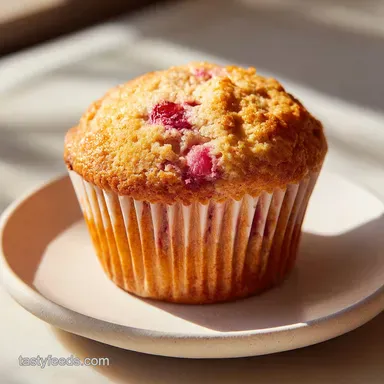
Rhubarb Muffins with Greek Yogurt
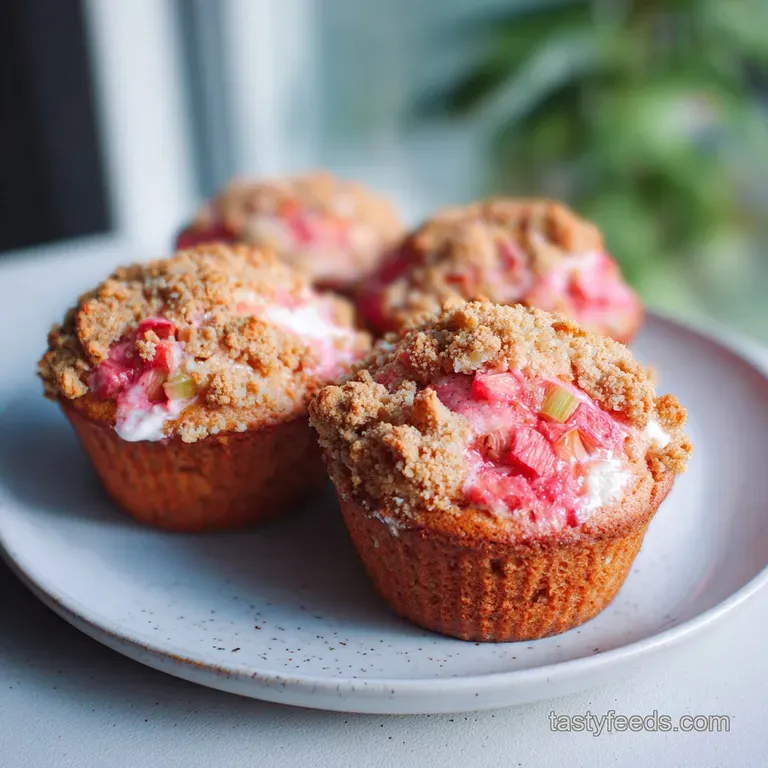
- Time: Active 15 minutes, Passive 20 minutes, Total 35 minutes
- Flavor/Texture Hook: Tart rhubarb chunks set against a velvety, cinnamon spiced crumb with a crunchy sugar lid.
- Perfect for: An upscale weekend brunch or a prepared weekday fix that stays moist for days.
- Critical Recipe Timing and Statistics
- Selecting Your Premium Baking Components
- Essential Tools for Bakery Success
- Perfect Steps for Fluffy Muffins
- Solving Common Muffin Baking Errors
- Creative Ways to Vary Flavor
- Debunking Morning Baking Myths
- Storing Your Fresh Morning Treats
- Elevating Your Morning Muffin Service
- Recipe FAQs
- 📝 Recipe Card
Critical Recipe Timing and Statistics
Understanding the "why" behind your bake is what transforms a casual cook into a confident baker. This recipe relies on a few key mechanical interactions that happen within the first few minutes of the pans entering the heat.
It’s not just about mixing things together; it’s about managing moisture and temperature to achieve that elusive bakery style height.
- Acid Base Interaction: The lactic acid in the 245g of Greek yogurt reacts immediately with the 0.5 tsp of baking soda, creating a surge of carbon dioxide bubbles that lift the heavy batter.
- Thermal Spring: Starting the oven at 218°C (425°F) for the first 5 minutes forces a rapid expansion of steam, pushing the muffin tops upward before the edges set.
- Starch Coating: Tossing the 300g of rhubarb in 2 tablespoons of flour creates a protective barrier that prevents the fruit from bleeding excess moisture into the surrounding crumb.
- Fat Emulsification: Whisking the oil, eggs, and yogurt for a full 60 seconds creates a stable emulsion that ensures the fat is evenly distributed, leading to a more consistent, silky texture.
| Method | Prep Time | Resulting Texture | Best For |
|---|---|---|---|
| Fresh Rhubarb | 15 minutes | Firm, tart bursts of fruit | Peak season flavor |
| Frozen Rhubarb | 15 minutes | Softer fruit, slightly more moisture | Year round baking |
| Roasted Rhubarb | 25 minutes | Concentrated, jammy pockets | Extra sweetness |
Using fresh rhubarb is always my first choice because it maintains its integrity during the over high heat phase. If you do use frozen, don't thaw it first; just toss it in the flour and bake directly from frozen to keep the batter from turning pink. If you're looking for a different morning treat, you might also enjoy my Classic Blueberry Muffins recipe for a more traditional fruit profile.
Selecting Your Premium Baking Components
The quality of your ingredients directly dictates the final "shatter" of the crust and the silkiness of the interior. When we talk about 245g of Greek yogurt, I always recommend using a 2% fat version.
Non fat yogurt lacks the necessary lipids to create a truly tender crumb, and full fat can sometimes make the muffin feel a bit too greasy when combined with the 120ml of avocado oil.
| Component | Role in Recipe | Pro Secret |
|---|---|---|
| Greek Yogurt | Provides acidity and protein structure | Use room temp yogurt to prevent the oil from seizing. |
| Avocado Oil | Ensures long lasting moisture and soft crumb | Substitute with melted coconut oil for a subtle nutty note. |
| Sea Salt | Enhances the tartness of the rhubarb | Use a fine grain to ensure it dissolves completely in the emulsion. |
For the flour, 250g of standard all purpose works best. Bread flour would make these too chewy, and cake flour doesn't have enough "backbone" to support the heavy pieces of rhubarb. The 1 tsp of ground cinnamon might seem like a small amount, but it acts as a bridge between the earthy rhubarb and the sweet vanilla.
Speaking of vanilla, 1 tbsp of pure vanilla extract is non negotiable it adds a floral depth that imitation vanilla simply can't mimic.
- Rhubarb (300g): Look for stalks that are firm and crisp, like celery. The color (red vs. green) doesn't actually impact the flavor much, though red stalks make for a prettier muffin.
- Granulated Sugar (150g): This provides the sweetness but also helps with browning through caramelization.
- Large Eggs (2): These must be at room temperature. If they are cold, they will cause your avocado oil and yogurt to clump, ruining your smooth emulsion.
- Baking Powder (2 tsp) & Soda (0.5 tsp): This dual leavening approach ensures both immediate lift and a sustained rise.
- Cinnamon (1 tsp): Adds warmth without overwhelming the fruit.
- Coarse Sanding Sugar (2 tbsp): This is what gives you that professional, crunchy "lid" on top of the muffin.
Essential Tools for Bakery Success
You don't need a professional kitchen, but a few specific tools make this rhubarb muffins with greek yogurt recipe much easier to manage. I always reach for a standard 12 cup muffin tin. Avoid the "jumbo" tins for this specific recipe, as the cook times are calibrated for the standard size. If the cups are too large, the rhubarb might sink too far before the batter sets.
A sturdy whisk is essential for that 60 second emulsion phase. You're looking to incorporate air and fully combine the fat and water based ingredients. For the folding stage, a large silicone spatula is your best friend.
It allows you to scrape the bottom of the bowl and fold the 250g of flour mixture into the wet ingredients without overworking the gluten. If you overmix, you’ll end up with "tunnels" in your muffins and a rubbery texture.
Chef Tip: Use a mechanical ice cream scoop (the kind with the trigger) to portion your batter. It ensures each of the 12 muffins is the exact same size, which means they will all finish baking at precisely the same time.
Perfect Steps for Fluffy Muffins
- Heat the oven. Set your oven to 218°C (425°F). Note: This high initial heat is the secret to the tall, domed tops.
- Prep the rhubarb. Dice 300g of rhubarb into 1/2 inch pieces and toss with 2 tbsp of your measured flour. Wait until the rhubarb is fully coated and matte.
- Create the emulsion. Whisk 245g Greek yogurt, 120ml avocado oil, 150g sugar, 2 eggs, and 1 tbsp vanilla in a large bowl. Whisk 60 seconds until pale and smooth.
- Sift the dry. Sift 250g flour, 2 tsp baking powder, 0.5 tsp baking soda, 0.5 tsp salt, and 1 tsp cinnamon over the wet ingredients.
- Fold gently. Use a spatula to fold until just a few streaks of flour remain. Stop before the batter is perfectly smooth.
- Add the fruit. Fold in the floured rhubarb during the last few turns of the spatula.
- Fill the tin. Divide batter into 12 lined cups, filling them all the way to the brim.
- Add the crunch. Sprinkle 2 tbsp of coarse sanding sugar evenly over the tops.
- The first bake. Bake at 218°C (425°F) for exactly 5 minutes until the tops begin to spring upward.
- The final bake. Lower the heat to 175°C (350°F) for 13 to 15 minutes until a toothpick comes out clean and the edges are golden.
The transition from 218°C to 175°C is critical. Do not open the oven door during this change! Opening the door lets out the very steam we've worked so hard to build up, which can cause the muffins to deflate. If you love the idea of a fruit forward muffin but want something a bit sweeter, you should check out my Chocolate Chip Banana Muffins recipe for a different texture profile.
Solving Common Muffin Baking Errors
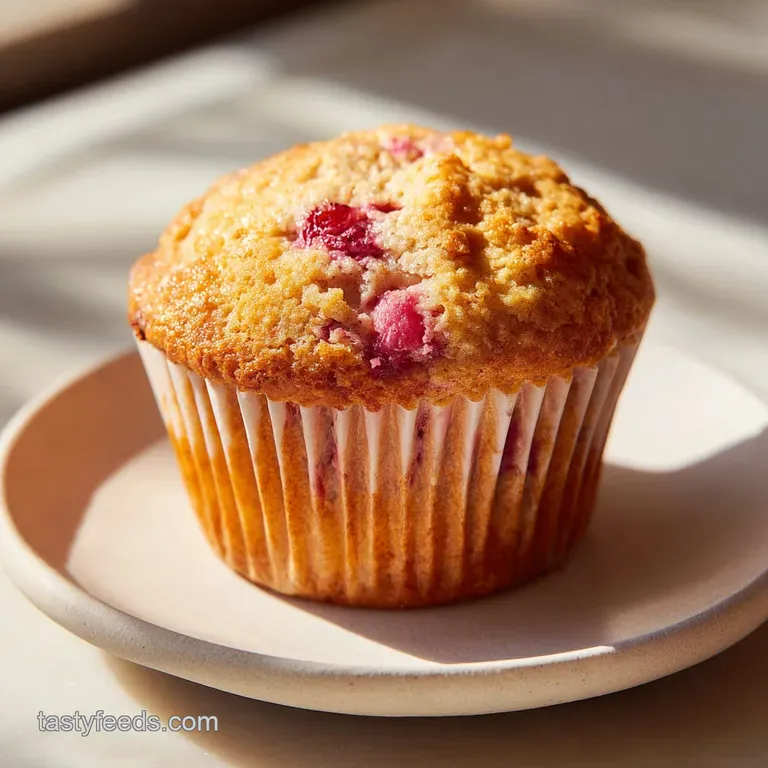
Even the best of us hit a snag sometimes. The most common issue with rhubarb muffins with greek yogurt is the fruit sinking to the bottom. This usually happens if the rhubarb pieces are cut too large or if they weren't properly tossed in that bit of flour.
The flour acts like "velcro," helping the fruit grip the batter as it rises.
Why Your Muffins Are Dense
If your muffins feel like hockey pucks rather than clouds, you likely overmixed the batter. When flour meets liquid, gluten starts to develop. If you whisk vigorously after adding the dry ingredients, that gluten becomes a tough web that traps the air too tightly.
You want to fold until the flour just disappears lumps are actually your friend here!
Why Your Muffins Are Soggy
Rhubarb is about 95% water. If your muffins are wet or mushy around the fruit, your oven temperature might have been too low, or you used frozen rhubarb that was thawed. Thawing releases all the cell structure's water at once.
Always bake from fresh or frozen solid to ensure the moisture is released slowly as the crumb sets.
| Problem | Root Cause | Solution |
|---|---|---|
| Flat Tops | Oven temp too low initially | Ensure oven reaches 218°C before putting the tin in. |
| Sinking Fruit | Rhubarb was too wet or too heavy | Dice smaller (1/2 inch) and toss thoroughly in flour. |
| Dry Crumb | Overbaked or used fat free yogurt | Check doneness at 13 mins; use at least 2% fat yogurt. |
Common Mistakes Checklist
- ✓ Always use room temperature eggs to maintain a stable emulsion.
- ✓ Never skip the 425°F initial blast; it's the only way to get that bakery dome.
- ✓ Don't over dice the rhubarb; 1/2 inch is the "Goldilocks" size for texture.
- ✓ Measure your flour by weight (250g) rather than volume to avoid packing it down.
- ✓ Let the muffins cool in the tin for only 5 minutes before moving to a wire rack.
Creative Ways to Vary Flavor
While the classic version is hard to beat, I’ve experimented with a few variations that really sing. For "Old Fashioned Rhubarb Muffins with Cinnamon Streusel," you can replace the sanding sugar with a mix of 50g brown sugar, 30g flour, and 20g cold butter rubbed together.
This adds a buttery, crumbly texture that contrasts beautifully with the soft yogurt base.
If you're looking for "Strawberry Rhubarb Yogurt Muffins," simply swap 100g of the rhubarb for 100g of diced strawberries. Be aware that strawberries are even more watery than rhubarb, so you might need to add an extra 2 minutes to the bake time.
For a "Healthy Rhubarb Muffins" spin, you can substitute half of the all purpose flour with whole wheat pastry flour. It adds a nutty depth without making the muffin feel like a lead weight.
| Servings | Rhubarb Weight | Yogurt Volume | Pan Size |
|---|---|---|---|
| 6 Muffins | 150g | 122g | 6 cup Tin |
| 12 Muffins | 300g | 245g | 12 cup Tin |
| 24 Muffins | 600g | 490g | Two 12 cup Tins |
If you want to scale this recipe up for a crowd, remember that spices like cinnamon don't need to be doubled exactly. For a double batch, use 1.5 tsp of cinnamon rather than 2 tsp to keep the flavor balanced.
Also, when baking 24 muffins at once, rotate your pans halfway through the second baking phase (the 175°C phase) to ensure even browning in all corners of the oven.
Debunking Morning Baking Myths
One myth I hear constantly is that you must peel rhubarb. Please, don't! The skin is where that beautiful pink color lives, and it softens perfectly in the heat of the oven. Peeling it is just extra work that results in a less vibrant muffin. Another common misconception is that "yogurt muffins" are always healthy.
While yogurt adds protein (5.5g per muffin!), these are still a treat with 150g of sugar. The yogurt is there for texture and chemistry, not just for a health halo.
Finally, some people think you can't use oil instead of butter for a "premium" muffin. In reality, oil based muffins stay moist significantly longer than butter based ones. Butter is solid at room temperature, which can make a muffin feel dry the next day.
Avocado oil (120ml) keeps these fluffy and soft even three days after baking.
Storing Your Fresh Morning Treats
These muffins are best enjoyed the day they are made, especially while that sanding sugar crust is still crisp. However, thanks to the 245g of Greek yogurt and 120ml of avocado oil, they hold up remarkably well. Store them in an airtight container at room temperature for up to 3 days.
To prevent them from getting "sweaty," place a piece of paper towel in the bottom of the container to absorb any wandering moisture.
For long term storage, these muffins freeze beautifully. Wrap each muffin individually in plastic wrap and then place them in a freezer bag. They will stay fresh for up to 2 months. When you're ready for a weekday fix, thaw them at room temperature for an hour, or pop one in the microwave for 20-30 seconds.
If you want to restore that "shatter" on the top, a quick 5 minute toast in a 150°C oven will do the trick.
Don't let any rhubarb scraps go to waste! If you have leftover ends or leaves (remember, leaves are toxic throw those away!), the small bits of stalks can be simmered with a little sugar and water to make a quick rhubarb simple syrup. It’s brilliant in sparkling water or over a bowl of yogurt.
We’re all about that zero waste kitchen life here!
Elevating Your Morning Muffin Service
Presentation is half the fun of a good brunch. I love serving these on a wooden board with a small bowl of extra Greek yogurt on the side for dipping. If you want to go all out, a drizzle of honey over the top of a warm muffin emphasizes the floral notes of the vanilla.
They pair perfectly with a sharp Earl Grey tea or a dark roast coffee that can stand up to the acidity of the fruit.
If you’re hosting a larger breakfast, try serving these alongside a savory dish to balance the sweetness. They are the perfect companion to a soft scramble or a vegetable frittata. The contrast between the salty eggs and the tart, sugary muffin is exactly what a slow Sunday morning needs.
Whatever you do, make sure to serve them while they still have a hint of warmth from the oven that's when the "velvety" texture is at its peak.
- If you want a crunchier top, increase the sanding sugar to 3 tablespoons.
- If you want a more tart flavor, reduce the sugar in the batter to 130g (but no lower, or the structure will suffer).
- If you want a bakery "mushroom" look, space the muffins out in the tin (fill every other hole) to allow for maximum airflow and rise.
This rhubarb muffins with greek yogurt recipe has become a staple in my house for a reason. It's reliable, it's bright, and it's a fantastic way to celebrate the fleeting rhubarb season. Get that oven preheated and let the morning baking begin!
Recipe FAQs
Is it true I must use melted butter for a richer muffin texture?
No, this is a common misconception. The recipe specifically uses avocado oil because its liquid state at room temperature keeps the muffins moist for days, unlike butter which can firm up and make the crumb dense.
How to keep the rhubarb from sinking to the bottom of the muffin?
Toss the diced rhubarb with 2 tablespoons of the measured flour before adding it to the batter. This coating creates friction, helping the pieces stay suspended throughout the muffin while baking.
How to achieve the signature bakery style muffin top?
Fill the muffin cups to the brim and bake at 425°F initially. This high heat start provides a quick rise, and if you enjoyed mastering this leavening technique, you can apply similar heat management principles to our crispy apple crisp for perfect topping textures.
Why do I need to whisk the yogurt, oil, sugar, and eggs for a full 60 seconds?
Whisking for 60 seconds creates a stable, smooth emulsion. This ensures the oil and Greek yogurt are fully incorporated, which is essential for a tender, consistent crumb throughout all 12 muffins.
How to store the muffins to keep the sanding sugar crust crisp?
Place a paper towel at the bottom of an airtight container before adding the muffins. The towel absorbs excess moisture as they sit, preventing the crust from becoming soft or "sweaty" while stored at room temperature.
Can I skip the initial 425°F blast and just bake at 350°F?
No, the high temperature blast is required for the proper rise. Baking at a constant 350°F will prevent the muffins from peaking correctly and may result in a flatter, less bakery style appearance.
How to determine if the muffins are fully baked?
Insert a toothpick into the center; it should come out clean or with just a few moist crumbs. Ensure you check at the 13-15 minute mark after the temperature reduction to avoid over baking and drying out the yogurt based crumb.
Rhubarb Muffins with Greek Yogurt for 12 Muffins