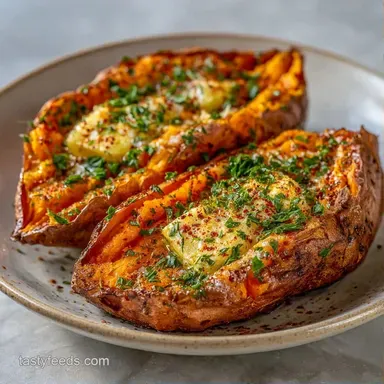
Baked Sweet Potato: Velvety and Rich
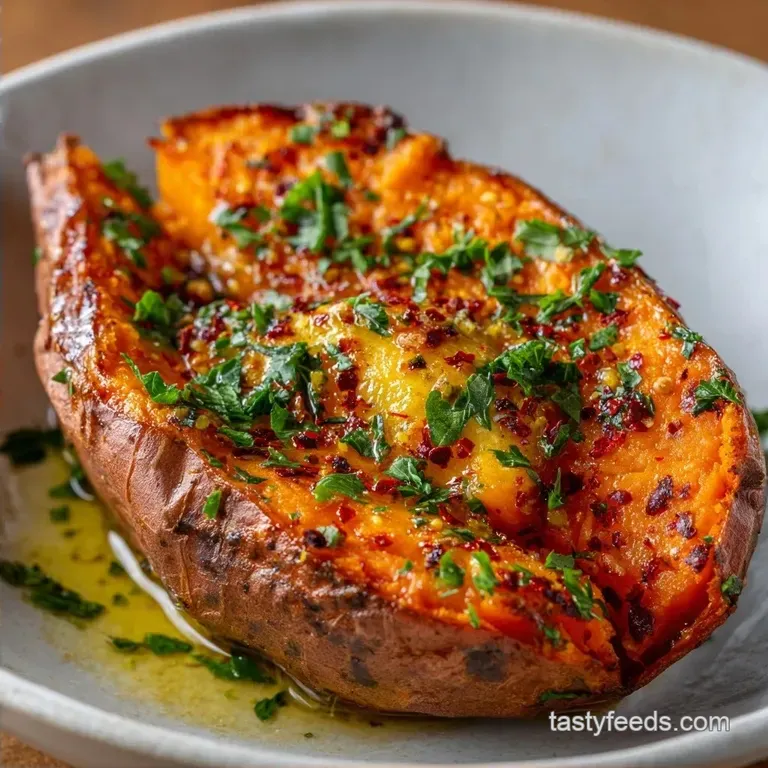
- Time: 5 min active + 60 min baking
- Flavor/Texture Hook: Mahogany, salty skin with a velvety, steaming interior
- Perfect for: Budget-friendly weeknight dinners or meal prep
- The Secret to a Baked Sweet Potato
- Why the Texture Wins
- Component Analysis
- Pantry Staples and Swaps
- Essential Kitchen Tools
- Step-by-Step Instructions
- Fixing Common Bake Issues
- Troubleshooting Common Issues
- Tweaking for Different Diets
- Keeping and Reheating
- Serving and Plating
- Dispelling Roast Myths
- Adjusting Your Batch Size
- Recipe FAQs
- 📝 Recipe Card
Right then, imagine this: you pull a tray out of the oven and the smell of caramelized sugars hits you immediately, almost like a roasted marshmallow but savory. You slice into the skin, and it gives a slight crackle before revealing a center that's so velvety it practically melts the moment it hits your tongue.
I'll be honest, I used to treat these things like regular potatoes. I'd just toss them in the oven and hope for the best. Half the time, I'd end up with a "Baked Sweet Potato" that was either hard as a rock in the middle or had skin so soggy it felt like wet cardboard.
It took some trial and error, and a lot of burnt edges, to realize that the skin is where the battle is won or lost.
The goal here isn't just "cooked through." We're aiming for that specific contrast between a salty, crisp exterior and a fluffy, steaming inside. Once you get the oil to salt ratio right, you'll never go back to the foil wrap method, which honestly just steams the potato and ruins the texture.
The Secret to a Baked Sweet Potato
When we're talking about the best way to roast these, most people overcomplicate it. You don't need fancy rubs or expensive sugars. The magic happens when you let the natural starches do the work at a high temperature.
I've found that 400°F is the sweet spot where the sugars caramelize without burning the skin to a crisp.
If you're looking for a hearty meal to go with this, it pairs brilliantly with an Easy Homemade Lentil Soup recipe for a plant based feast that won't break the bank. The earthiness of the lentils cuts right through the sweetness of the potato.
The key is patience. Don't be tempted to pull them out early just because they look done. You want that skin to be a deep, dark mahogany. That color is your signal that the inside has reached that velvety consistency we're after.
Why the Texture Wins
I used to wonder why some potatoes stayed fluffy while others turned into mush. It's all about how the moisture escapes.
- Steam Venting
- Pricking the skin lets internal steam escape, which prevents the potato from bursting and keeps the interior from becoming too watery.
- Fat Barrier
- The olive oil creates a conductive layer that transfers heat more efficiently into the skin, causing it to crisp rather than dry out.
- Starch Breakdown
- High heat breaks down the complex starches into simpler sugars, which is what gives it that natural sweetness.
| Method | Time | Texture | Best For |
|---|---|---|---|
| Oven Roast | 60 mins | Crispy skin, fluffy center | Maximum flavor |
| Stovetop Boil | 20 mins | Soft skin, watery center | Mash/Puree |
| Air Fryer | 35 mins | Very crisp, dense center | Quick servings |
Component Analysis
You don't need a lot of ingredients, but the ones you use have a specific job to do. It's not just about taste; it's about the reaction in the oven.
| Ingredient | Science Role | Pro Secret |
|---|---|---|
| Olive Oil | Heat Conductor | Rub it in vigorously to avoid "bald" spots on the skin |
| Kosher Salt | Moisture Draw | Draws moisture from the skin to create a shatter crisp crust |
| Unsalted Butter | Flavor Emulsion | Adds a silky mouthfeel to the starch |
| Smoked Paprika | Aroma Depth | Adds a "fire roasted" scent without a grill |
Pantry Staples and Swaps
Keep it simple. I'm a fan of using what's already in the cupboard. If you're out of something, don't run to the store; just use the swaps below.
- 4 medium sweet potatoes, approx 2 lbs (900g) Why this? Medium size ensures even cooking.
- 2 tbsp olive oil Why this? High smoke point for 400°F.
- 1 tsp kosher salt Why this? Coarser grains create better texture.
- 2 tbsp unsalted butter, softened Why this? Melts instantly into the steam.
- 1 pinch smoked paprika Why this? Adds a woody, savory note.
- 1 sprig fresh parsley, chopped Why this? Freshness to cut the richness.
| Original Ingredient | Substitute | Why It Works |
|---|---|---|
| Olive Oil (2 tbsp) | Avocado Oil (2 tbsp) | Similar smoke point. Note: Neutral flavor, less fruity |
| Unsalted Butter (2 tbsp) | Coconut Oil (2 tbsp) | Great dairy-free fat. Note: Adds a slight coconut aroma |
| Smoked Paprika | Cumin or Garlic Powder | Different flavor profile. Note: Cumin makes it more "earthy" |
| Kosher Salt | Sea Salt | Similar mineral content. Note: Use slightly less if using fine sea salt |
Essential Kitchen Tools
You don't need a professional kitchen for this. A basic setup is all it takes. I use a standard baking sheet, but the parchment paper is non negotiable. Without it, the natural sugars that leak out of the potato will practically glue the vegetable to your pan, and you'll spend twenty minutes scrubbing it.
A sturdy fork is your best friend here. You want something with sharp tines to really pierce the skin. If you have a meat thermometer, that's a bonus, but usually, a simple squeeze test is enough. If the potato gives way easily under your thumb, it's ready.
Step-by-step Instructions
Let's crack on. Follow these steps exactly for that mahogany finish.
- Scrub the potatoes thoroughly under cold water and pat them completely dry. Note: Wet skin won't crisp up; it will just steam.
- Use a fork to prick each potato 5 6 times across all sides to create steam vents.
- Drizzle olive oil over each potato and rub it in vigorously; sprinkle salt evenly across the skin.
- Place potatoes on a parchment lined baking sheet and bake at 400°F (200°C) for 45–60 minutes until the skin is mahogany colored and the center is soft.
- Slice a slit down the center of each potato and gently squeeze the ends toward the middle to fluff the interior.
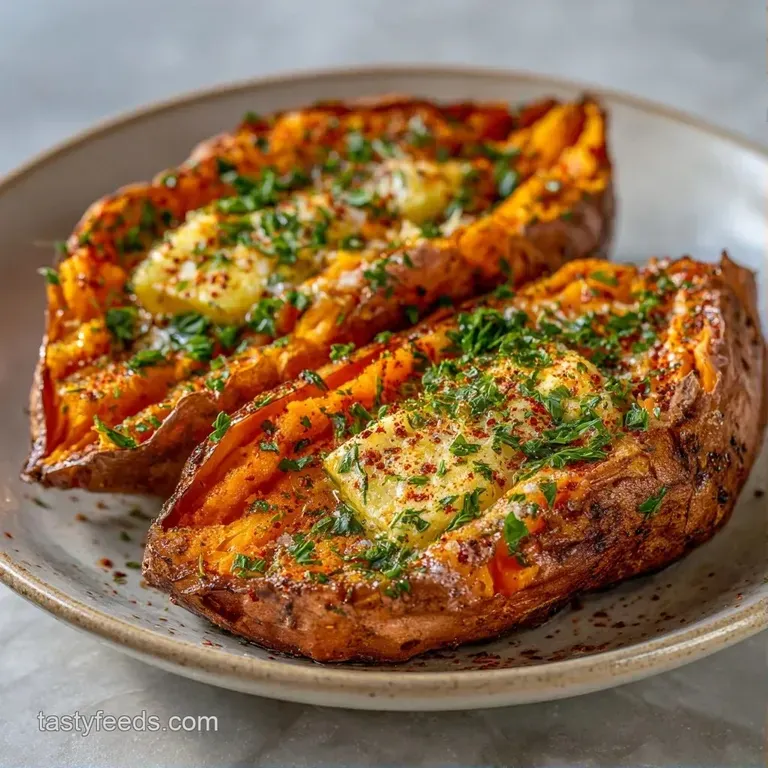
- Immediately add a pat of butter and a sprinkle of smoked paprika to each potato while steaming.
- Garnish with chopped fresh parsley.
Chef's Tip: If you want an extra deep flavor, try adding a tiny pinch of cinnamon to the butter before stuffing it in. It doesn't make it a dessert, but it brings out the natural nuttiness of the potato.
Fixing Common Bake Issues
Even with a simple recipe, things can go sideways. Usually, it's a temperature or moisture issue. If your potato comes out feeling like a rock, you likely didn't bake it long enough or your oven is running cold.
Troubleshooting Common Issues
| Issue | Solution |
|---|---|
| Why Your Potato Is Hard Inside | This is the most common frustration. It happens when the outside looks done, but the heat hasn't penetrated the core. |
| Why Your Skin Is Soggy | Soggy skin is almost always caused by two things: wrapping the potato in foil or not drying the skin before adding the oil. Foil traps the steam, which is great for boiling but terrible for roasting. |
| Why the Bottom Is Burnt | If the bottom is charred but the top is pale, your baking sheet is absorbing too much heat. Moving the rack to the center or using a double layer of parchment can help. |
Common Mistakes Checklist
- ✓ Did you pat the skin completely dry?
- ✓ Did you prick the skins to let steam out?
- ✓ Is the oven actually at 400°F?
- ✓ Did you avoid using aluminum foil?
- ✓ Did you squeeze the potato to fluff the inside?
Tweaking for Different Diets
This recipe is naturally quite flexible. If you're avoiding dairy, the coconut oil swap mentioned earlier is your best bet. It gives you that same fatty richness without the lactose.
For those following a stricter low sodium diet, you can replace the salt with a dusting of garlic powder, which still provides a savory punch.
If you're looking for a different format, try creating baked sweet potato halves. Just slice them lengthwise before oiling and salt. They'll cook faster (about 30-40 minutes) and give you more surface area for the butter to melt into.
For a snack version, try baked sweet potato cubes. Dice them into 1 inch pieces, toss in the oil and salt, and roast at 400°F for 20-25 minutes. They're great as a side or as a base for a bowl. If you're craving something sweet for breakfast, these go surprisingly well alongside some Classic Banana Muffins.
Keeping and Reheating
If you have leftovers, don't let them go to waste. A Baked Sweet Potato stores well in the fridge for up to 4 days. Just wrap them individually in parchment paper or place them in an airtight container.
For freezing, I recommend slicing the cooked potatoes in half and freezing them on a tray first so they don't stick together. Once frozen, toss them in a freezer bag. They'll stay good for about 2 months.
To reheat, avoid the microwave if you can. The microwave will turn that mahogany skin into a sponge. Instead, pop them back in the oven at 350°F for about 15 minutes. This restores the crunch and keeps the interior velvety.
Serving and Plating
Presentation is everything, even for a budget meal. Instead of just serving them whole, I like to "boat" them. Slice the top open and pile in your toppings. For a savory twist, add a dollop of Greek yogurt and some chives. For something heartier, top them with black beans and avocado.
If you're serving this for a crowd, place them on a wooden board with the butter and paprika in small bowls on the side. It makes a simple side dish feel like a curated feast.
Decision Shortcut:
- If you want it faster: Cut the potato in half lengthwise.
- If you want a crunchier skin: Increase salt slightly.
- If you want a creamier center: Let it rest for 5 minutes before slicing.
Dispelling Roast Myths
One big misconception is that you need to wrap potatoes in foil to keep them moist. In reality, foil prevents the skin from roasting. You lose that shatter crisp texture and end up with something that feels boiled.
Another myth is that "Yams" and "Sweet Potatoes" are the same thing. They aren't. Yams are starchier and drier with rough skin, while sweet potatoes are sweeter with smoother, reddish skin. Learn more here. Using a true yam in this recipe might result in a drier interior.
Finally, some people think you should soak them in water first. Don't do this for roasting. Extra moisture is the enemy of a crisp skin.
Adjusting Your Batch Size
When you're cooking for a crowd, you can't just multiply everything linearly. If you're doubling the recipe to 8 potatoes, don't double the salt. Use about 1.5x the salt and spices. Too much salt can draw out excessive moisture, making the pan watery.
For a smaller batch (1-2 potatoes), reduce the baking time by about 10-15%. Smaller loads in the oven allow the heat to circulate more freely, which can speed up the cooking process.
If you're using a very large tray for a massive batch, remember to rotate the pan halfway through. The potatoes in the center often cook slower than the ones on the edges.
Right then, you've got everything you need to nail this. It's a simple, honest dish that proves you don't need a huge budget to get high end results. Just remember: dry the skin, prick the vents, and wait for that mahogany color. Trust me, your taste buds will thank you.
Recipe FAQs
Is it better to bake sweet potatoes at 400 or 425?
Stick with 400°F. This temperature ensures the interior softens completely without burning the exterior skin.
Are sweet potatoes ok for T2D?
Yes, in moderation. Their fiber content helps slow sugar absorption, though portion control is key for blood glucose management.
Should you wrap a sweet potato in foil when baking?
No, avoid using foil. Wrapping traps steam against the skin, which prevents the mahogany crispness and results in a soggy texture.
How to cook the best baked sweet potato?
Rub scrubbed, dry potatoes with olive oil and salt. Bake at 400°F for 45-60 minutes, then slice open and fluff with butter and smoked paprika.
How to cook sweet potatoes in an oven?
Prick the skins with a fork and place on a parchment lined sheet. Bake at 400°F (200°C) for 45 to 60 minutes until the centers are soft.
How to bake a large sweet potato?
Increase the baking time beyond 60 minutes. Use a knife to test the center; it should slide in and out with no resistance.
Can I use baked sweet potatoes in a spinach salad?
Yes, they add great heartiness. If you prefer a firmer bite for your greens, try using air fryer roasted pieces instead.
Baked Sweet Potato for 4 Servings