Crispy Salmon Rice Bowl in 25 Minutes
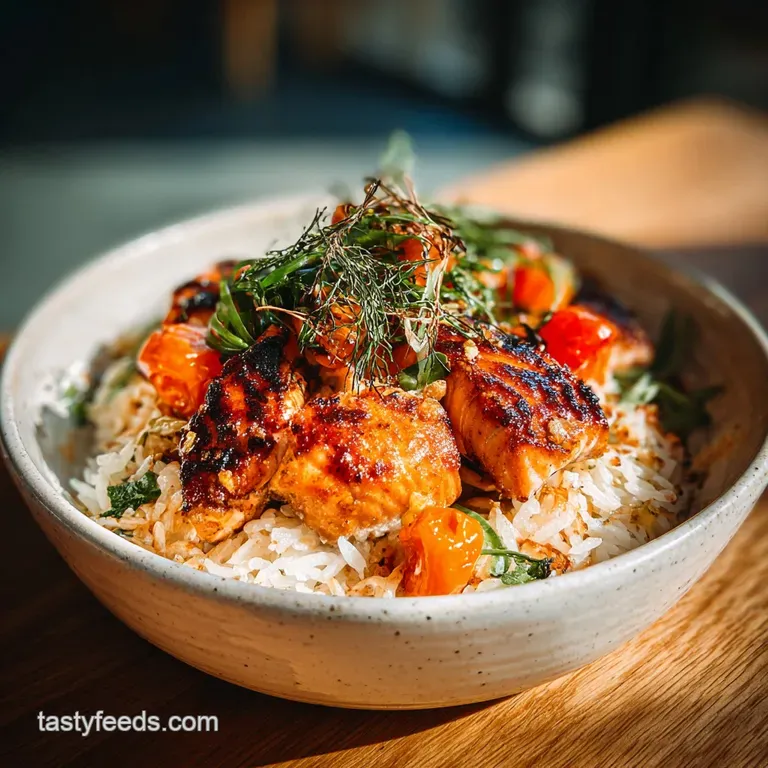
- Time: Active 15 minutes, Passive 10 minutes, Total 25 minutes
- Flavor/Texture Hook: Savory sweet glaze with shattering crispy skin
- Perfect for: High protein weeknight dinners and efficient meal prep
- Quick Healthy Salmon Rice Bowl Guide
- The Science of Thermal Searing
- Crucial Recipe Metrics and Yield
- Deep Dive into Key Ingredients
- Necessary Tools for Kitchen Success
- Stepwise Guide to Flaky Results
- Fixing Texture and Flavor Problems
- Creative Variations for Custom Bowls
- Storage Guidelines and Waste Reduction
- Best Ways to Present Food
- High in Sodium
- Recipe FAQs
- 📝 Recipe Card
Quick Healthy Salmon Rice Bowl Guide
The high pitched hiss of salmon skin hitting a hot cast iron pan is basically my favorite song. There is something about that specific sound that tells you exactly when the fat is rendering and that coveted, crackling texture is forming.
I used to be terrified of cooking fish at home, thinking I would either turn the kitchen into a smokehouse or end up with a dry, chalky mess. But once I figured out the logic of the sear and glaze method, it changed everything.
This Salmon Rice Bowl is my absolute Tuesday night survival strategy. It is the dish I make when I am starving, short on time, but still want to feel like a person who has their life together.
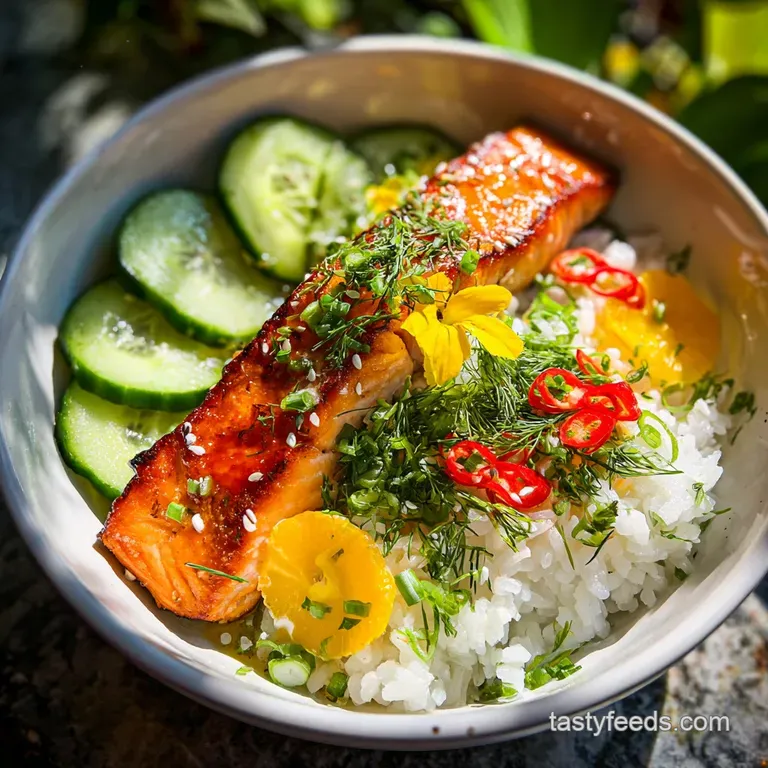
We are talking about flaky, fatty fish, a sticky ginger soy glaze that clings to every grain of jasmine rice, and the cooling crunch of fresh cucumbers. It is a complete sensory loop that hits every salty, sweet, and fatty note your brain craves after a long day.
You do not need to be a sushi chef to pull this off. We are going to focus on heat management and timing so the salmon stays buttery in the center while the outside gets that gorgeous lacquered finish. This is not just a meal; it is a reliable system for better eating.
Let's get into the specifics of why this works and how you can nail it on the first try.
The Science of Thermal Searing
The Maillard Reaction: High heat triggers a chemical reaction between amino acids and reducing sugars, creating that savory brown crust and complex aroma. To achieve this on salmon, the surface must be devoid of surface moisture, or the fish will steam instead of sear.
Carryover Heat Dynamics: Salmon continues to cook for several minutes after being removed from the pan due to internal thermal energy. Pulling the fillets at an internal temperature of 130°F ensures they reach the velvety 135-145°F range while resting, preventing protein fibers from tightening and becoming dry.
| Salmon Thickness | Internal Temp | Rest Time | Visual Cue |
|---|---|---|---|
| 0.75 inch | 125°F | 3 mins | Opaque edges, translucent core |
| 1.0 inch | 130°F | 4 mins | Flakes easily with fork |
| 1.25 inches | 135°F | 5 mins | Solid pink throughout |
Choosing the right approach for your fish makes a significant difference in the final texture. If you are in a rush, a thinner fillet will give you more crispy surface area relative to the meat.
However, a thicker cut allows for a more dramatic contrast between the seared exterior and the tender, medium rare interior that many enthusiasts prefer.
Regardless of the cut you choose, the preparation of the rice is equally vital. Using a Fried Rice recipe technique of slightly drying out the grains can prevent the bowl from becoming soggy once the soy glaze is added. The starch in the rice acts as a sponge, so the goal is to have grains that are distinct and firm enough to hold the weight of the salmon and avocado.
Crucial Recipe Metrics and Yield
| Metric Category | Specification |
|---|---|
| Recipe Yield | 2 servings |
| Prep Time | 15 minutes |
| Cook Time | 10 minutes |
| Total Time | 25 minutes |
Deep Dive into Key Ingredients
| Ingredient | Science Role | Pro Secret |
|---|---|---|
| Salmon Fillets | Provides structure and healthy fats | Press skin down firmly for 30 seconds to prevent curling |
| Mirin | Lowers boiling point of glaze | Adds a glossy sheen that soy sauce alone cannot achieve |
| Jasmine Rice | Starch base for flavor absorption | Rinse three times to remove excess surface amylopectin |
| Fresh Ginger | Breaks down protein enzymes | Grate directly into the pan to release volatile oils |
Success with this Salmon Rice Bowl depends heavily on the quality of your base ingredients. Start with 12 oz skin on salmon fillets (2 x 6 oz fillets) for the best texture. You will need 1 tbsp avocado oil because of its high smoke point, and 0.5 tsp kosher salt for seasoning.
The glaze is a balanced mix of 2 tbsp soy sauce, 1 tbsp mirin, and 1 tbsp honey, rounded out by 1 tsp grated fresh ginger.
For the bowl assembly, prepare 2 cups cooked jasmine rice. You will also need 1 ripe avocado, sliced, and 1 Persian cucumber, sliced, to provide a fresh contrast. Finish the dish with 1 tsp furikake, 1 tsp toasted sesame seeds, and 1 stalk of sliced scallion for that essential crunch and hit of onion flavor.
| Original Ingredient | Substitute | Why It Works |
|---|---|---|
| Jasmine Rice | Cauliflower Rice | Lowers carbs. Note: Result is significantly less filling |
| Mirin | Dry Sherry + 1/2 tsp sugar | Mimics the acidity and sweetness profile |
| Avocado Oil | Grapeseed Oil | Similar high smoke point and neutral flavor profile |
| Soy Sauce | Tamari | Makes the dish gluten-free without losing the savory saltiness |
The swap to cauliflower rice is great for a light lunch, but if you are looking for that classic Japanese Salmon Rice Bowl experience, stick with the jasmine or short grain sushi rice. The way the rice absorbs the mirin and honey glaze is a core part of the satisfaction. If you are looking for a completely different profile, you might enjoy the textures found in a Vegetable Chaat Salad recipe, which uses similar fresh vegetable components.
Necessary Tools for Kitchen Success
A heavy bottomed pan is your best friend here. I personally swear by a cast iron skillet because it holds heat like a champion. When you drop that cold fish into the pan, a thin non stick skillet will lose its temperature immediately, leading to sticking and tearing.
The cast iron stays hot, ensuring the skin crisps up the second it makes contact.
You also really want a microplane or a very fine grater for the ginger. If you just mince the ginger with a knife, you end up with woody bits in your sauce. Grating it creates a paste that emulsifies perfectly with the honey and soy sauce. It makes the glaze smooth and velvety instead of chunky.
Chef's Tip: Use a fish spatula (the long, thin, flexible kind) to flip the salmon. It slides under the delicate skin without breaking it, which is the most common way people ruin the presentation of their fish.
Stepwise Guide to Flaky Results
1. Prepare the Salmon
Pat the 12 oz skin on salmon fillets completely dry with paper towels. Note: Surface moisture is the enemy of a crispy sear. Season both sides with 0.5 tsp kosher salt.
2. Mix the Glaze
Whisk together 2 tbsp soy sauce, 1 tbsp mirin, 1 tbsp honey, and 1 tsp grated fresh ginger in a small bowl. Note: This ensures the honey is fully dissolved before it hits the heat.
3. Heat the Pan
Add 1 tbsp avocado oil to a skillet over medium high heat until the oil shimmers and barely wisps smoke.
4. Sear the Skin
Place salmon fillets skin side down in the pan. Press firmly with a spatula for 15 seconds. Cook 4-5 minutes until the skin is dark gold and releases easily.
5. Flip the Fish
Carefully flip the fillets. Cook for another 2-3 minutes until the sides are opaque and center is slightly translucent.
6. Reduce the Sauce
Pour the soy honey mixture into the pan. Cook for 1-2 minutes until the glaze bubbles and thickens into a syrup.
7. Baste the Salmon
Use a spoon to pour the hot glaze over the salmon repeatedly. Note: This coats the fish and finishes the cooking process gently.
8. Assemble the Base
Divide 2 cups cooked jasmine rice between two bowls. Spoon extra pan glaze over the rice to infuse it with flavor.
9. Add Fresh Toppings
Place the salmon on the rice and arrange the sliced avocado and Persian cucumber alongside.
10. Final Garnish
Sprinkle with 1 tsp furikake, 1 tsp toasted sesame seeds, and the sliced scallion. Serve immediately while the skin is shatter crisp.
Fixing Texture and Flavor Problems
Why Your Salmon Is Dry
Usually, this happens because the heat was too low for too long, or the fish stayed in the pan while the sauce reduced. Overcooked salmon loses its fat and becomes stringy.
Why the Skin Is Soggy
This is the most common heartbreak. If you don't pat the fish dry or if you crowd the pan, the steam gets trapped under the skin.
| Problem | Root Cause | Solution |
|---|---|---|
| Fish sticks to pan | Pan or oil was too cold | Wait for oil to shimmer before adding the salmon |
| Glaze is bitter | Honey or soy burnt | Reduce heat to medium before adding the liquid |
| Rice is mushy | Excess water or over stirring | Use a 1:1.5 rice to water ratio and fluff with a fork |
Common Mistakes Checklist
- ✓ Pat the salmon skin bone dry with paper towels before seasoning.
- ✓ Do not move the fish for the first 3 minutes of searing to let the crust form.
- ✓ Remove the salmon from the pan the second it reaches your desired doneness.
- ✓ Rinse your jasmine rice until the water runs clear to prevent clumping.
- ✓ Use a high smoke point oil like avocado oil; avoid extra virgin olive oil for searing.
Creative Variations for Custom Bowls
1. The Poke Style Twist
If you want something cooler and more vibrant, you can skip the pan sear and use high-quality raw salmon. Toss the cubes in the ginger soy glaze (skip the honey or use less) and add some edamame and shredded carrots. It turns the hot meal into a refreshing salad style bowl that is perfect for summer.
2. The Low Carb Swap
Instead of jasmine rice, try using a bed of massaged kale or shredded cabbage. The warmth of the salmon and the honey glaze acts as a built in dressing for the greens. It is a great way to pack in more fiber without losing the heart of the dish.
Storage Guidelines and Waste Reduction
Storage: Keep the salmon and rice in separate airtight containers in the fridge for up to 2 days. To reheat, I recommend using a toaster oven for the salmon to keep the skin from getting rubbery. Microwave the rice with a damp paper towel on top to restore its moisture.
I do not recommend freezing the cooked salmon, as the texture becomes quite grainy upon thawing.
Zero Waste: If you have leftover cucumber or scallion ends, toss them into a jar of white vinegar with a pinch of salt to make quick pickles. For the salmon skin, if it loses its crunch, you can peel it off and crisp it up in an air fryer for 2 minutes to make "salmon bacon" for a snack later. Any leftover rice can be used the next morning in a Beef Bulgogi Bowls recipe adaptation for a quick lunch.
Best Ways to Present Food
1. The Perfect Pairing
Balance the richness of the salmon with something acidic. A side of pickled ginger or a squeeze of fresh lime juice over the avocado brightens the whole bowl. If you want a more substantial side, a light miso soup or a seaweed salad complements the Japanese inspired flavors perfectly.
2. Presentation Tip
To make the bowl look like it came from a high end cafe, don't just dump the toppings on. Fan out the avocado slices and stack the cucumbers in a neat row. Place the salmon at a slight angle across the rice, and sprinkle the furikake in a concentrated line rather than all over.
This creates visual "zones" that make the meal feel more intentional and appetizing.
This Salmon Rice Bowl is more than just a quick fix; it is a lesson in how simple techniques can yield incredible results. Once you master the timing of the sear and the reduction of the glaze, you will find yourself making versions of this every week.
It is fast, it is clean, and it satisfies that deep craving for something savory and nourishing. Trust me, the effort you put into drying that salmon skin will pay off the moment you take that first crunchy, salty bite.

High in Sodium
1045 mg of sodium per serving (45% of daily value)
The American Heart Association recommends limiting sodium intake to about 2,300mg per day.
Tips to Reduce Sodium in Your Salmon Bowl
-
Low-Sodium Soy Sauce-20%
Swap regular soy sauce for a low-sodium version. This simple change can significantly reduce the sodium content of your marinade.
-
Reduce Added Salt-15%
Cut back on the amount of kosher salt added directly to the salmon. Start with a pinch instead of 0.5 tsp and taste before adding more.
-
Increase Honey & Mirin-10%
Reduce the soy sauce and increase the honey and mirin to add sweetness and flavor. Try a 2:1 ratio of honey/mirin to soy sauce to reduce overall sodium.
-
Unsalted Rice-5%
Ensure the cooked jasmine rice is prepared without added salt. Even a small amount of salt in the rice can contribute to the overall sodium content.
-
Fresh Herbs & Spices
Enhance the flavor of the salmon and rice bowl with a variety of fresh herbs and spices like dill, parsley, or garlic powder. These can add depth without increasing sodium.
Recipe FAQs
What ingredients go well in a salmon rice bowl?
Focus on balance and contrast. Essential pairings include a sticky ginger soy glaze, creamy avocado, and crisp cucumber slices for textural contrast.
Can you eat cooked salmon and rice together in the same meal?
Yes, absolutely. This combination forms a nutritionally complete and traditional base for many Asian inspired dishes, offering protein, carbohydrates, and healthy fats.
Is a salmon rice bowl generally considered healthy?
Yes, it can be very healthy. The dish is high in Omega-3 fatty acids from the salmon and provides complex carbohydrates, though overall health depends on minimizing sugar in the glaze.
Are rice bowls inherently healthy?
Not always; portion control matters. While rice bowls usually contain lean protein and vegetables, they can become unhealthy if they feature high sodium sauces or overly large portions of refined white rice.
How do I ensure my salmon skin gets perfectly crispy on the rice bowl?
Pat the skin completely dry before searing. Cook the salmon skin side down first over medium high heat without moving it for several minutes until the fat renders and it releases naturally from the pan.
How long should I cook salmon for a medium rare finish in the bowl?
Aim for an internal temperature of 130°F before resting. For a standard one-inch fillet, this usually means 4-5 minutes skin side down, then flipping for only 2-3 minutes to utilize carryover heat.
What is the best way to prevent the rice bowl from getting soggy after adding the glaze?
Apply the glaze sparingly to the rice base. Drizzle most of the sticky glaze directly onto the fish after plating, reserving only a tablespoon to lightly coat the rice grains instead of saturating them.
Salmon Rice Bowl Recipe
Ingredients:
Instructions:
Nutrition Facts:
| Calories | 812 kcal |
|---|---|
| Protein | 42.1 g |
| Fat | 41.2 g |
| Carbs | 66.4 g |
| Fiber | 9.8 g |
| Sugar | 14.2 g |
| Sodium | 1045 mg |
