Turkey Jerky Recipe: Smoky & Savory Snack
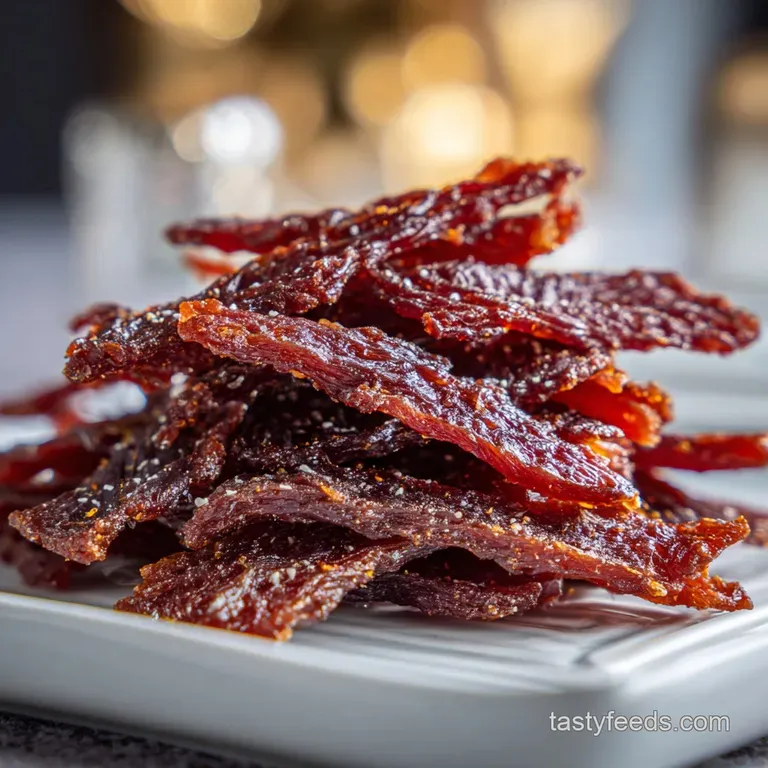
- Time: Active 20 minutes, Passive 5 hours, Total 5 hours 20 mins
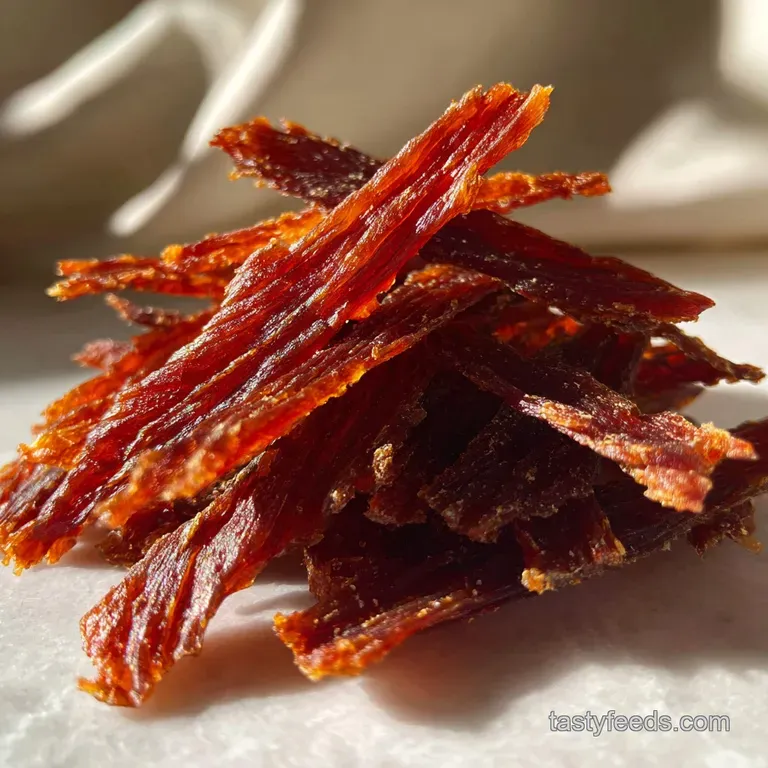
- Flavor/Texture Hook: Smoky, peppery, and intensely savory with a satisfyingly leathery chew.
- Perfect for: Hiking trips, gym bags, and budget conscious meal prepping.
Essential Specs for Faster Snacking
Right then, let's talk logistics. Whether you are using a dedicated dehydrator or just your standard kitchen oven, the goal remains the same: steady, low heat with plenty of airflow. If you’re a fellow snack queen, you’ll know that having high protein bites ready is a lifesaver, much like having a batch of Edible Cookie Dough recipe in the fridge for late night cravings.
The Osmosis of the Soak
Salt and acid in the marinade draw out moisture while simultaneously tenderizing the turkey fibers. This process denatures the proteins, allowing the spices to penetrate deep into the meat for a consistent flavor in every bite.
| Method | Time | Texture | Best For |
|---|---|---|---|
| Dehydrator | 5 hours | Consistently leathery | Set and forget prep |
| Standard Oven | 4 hours | Slightly crispier edges | No special gear needed |
| Air Fryer | 2 hours 30 mins | Chewier/Thicker | Small viral snack batches |
Cooking meat for long periods at low temperatures can feel a bit counterintuitive if you're used to quick sears. However, the low heat is what prevents the turkey from becoming a rock. It’s about evaporation, not browning. If you’ve ever tried our Olive Garden Chicken recipe, you know that thin sliced poultry needs a gentle touch to stay edible, and this jerky is no different.
Science of the Savory Soak
When we talk about jerky, we are really talking about the science of water activity. By removing enough moisture, we make it impossible for spoilage causing bacteria to survive. But we don't want to remove all the moisture, or we'd be eating turkey dust.
The honey in this turkey jerky recipe acts as a humectant, which is just a fancy way of saying it holds onto just enough water to keep the jerky from shattering into a million pieces.
| Ingredient | Science Role | Pro Secret |
|---|---|---|
| Soy Sauce | Primary Curing Agent | Use reduced sodium to control saltiness without losing the umami. |
| Apple Cider Vinegar | pH Regulator | Breaks down tough connective tissue for a better "pull." |
| Honey | Humectant/Softener | Prevents the jerky from becoming overly brittle after cooling. |
The interaction between the liquid smoke and the smoked paprika creates a layered depth that mimics a real wood fired smoker. It's a bit of a kitchen hack, but it works brilliantly. Don't skip the onion and garlic powders either; they provide the "base notes" that make the spicy red pepper flakes pop.
Essential Tools for the Snap
You don't need a professional kitchen, but a few specific items make this much easier. A very sharp chef’s knife is non negotiable. If your knife is dull, you’ll end up "sawing" through the turkey breast, which leads to uneven strips and uneven drying.
I actually recommend popping the turkey in the freezer for about 20 minutes before you start slicing. It firms up the meat and makes those thin, uniform cuts a breeze.
Protein and Marinade Components
- 2 lbs turkey breast tenderloin: Lean and easy to slice. Why this? Fat goes rancid quickly, so lean cuts are essential for shelf stable jerky.
- Substitute: Chicken breast (same lean profile).
- 1/2 cup reduced sodium soy sauce: The salt base. Why this? Provides depth and salt for the curing process.
- Substitute: Tamari for a gluten-free version.
- 2 tbsp Worcestershire sauce: Adds fermented complexity. Why this? Brings a vinegary, anchovy backed punch.
- Substitute: Balsamic vinegar mixed with a pinch of salt.
- 2 tbsp honey: For balance. Why this? Softens the texture and counteracts the salt.
- Substitute: Maple syrup for a woodsy flavor.
- 1 tbsp liquid smoke: The "outdoor" flavor. Why this? Essential for that authentic jerky taste without a smoker.
- Substitute: Extra smoked paprika (though it will be less intense).
- 1 tbsp apple cider vinegar: Tenderizer. Why this? Lowers the pH to help preserve the meat.
- Substitute: White wine vinegar.
- 1 tsp smoked paprika: Color and spice. Why this? Gives the jerky a beautiful reddish brown hue.
- 1 tsp onion powder: Savory backbone.
- 1 tsp garlic powder: Pungent depth.
- 1/2 tsp black pepper: For a slow burn.
- 1/2 tsp red pepper flakes: For immediate heat.
step-by-step Drying for Success
- Partial Freeze. Place the 2 lbs turkey breast tenderloin in the freezer for 20 minutes. Note: This makes the meat firm enough to slice into consistent 1/4 inch strips without it sliding around.
- Slice Against Grain. Cut the turkey into long strips, ensuring you cut across the muscle fibers. Check for "grains" running along the meat.
- Whisk Marinade. Combine soy sauce, Worcestershire, honey, liquid smoke, ACV, and all spices in a large bowl. Note: Make sure the honey is fully dissolved so it doesn't clump.
- Deep Soak. Add the turkey strips to the marinade, ensuring every piece is coated. Cover and refrigerate for at least 6 hours, or ideally overnight.
- Drain and Pat. Remove turkey from the fridge and drain the excess liquid. Pat the strips with paper towels until they are no longer dripping.
- Arrange for Airflow. Place the strips on dehydrator trays or a wire rack set over a baking sheet. Leave at least half an inch of space between each strip.
- Initial Heat. Set your dehydrator to 160°F or your oven to its lowest setting (usually 170°F).
- The Drying Phase. Process for 5 hours until the jerky bends but doesn't snap immediately. Note: It should look dark and feel leathery to the touch.
- The Safety Check. Ensure the internal temp of a thicker piece has reached 160°F during the process.
- Cool and Cure. Let the jerky cool completely on the racks before bagging. Watch for any condensation forming in the bag; if you see it, dry for another 30 mins.
Chef's Tip: For a "professional" look, sprinkle a tiny bit of extra cracked black pepper over the strips right before they go into the heat. It sticks to the surface and creates a beautiful, textured finish.
Fixing Those Common Snacking Fails
One of the biggest mistakes people make with a turkey jerky recipe is slicing the meat too thick. If it's too thick, the outside dries into a hard shell while the inside stays moist and prone to mold. It's better to go slightly thinner and check it early than to have chunks that never quite cure.
Slicing Against the Grain
If you slice with the grain, your jerky will be incredibly tough and stringy, making it hard to chew. Slicing against the grain breaks up those long muscle fibers, resulting in a snack that has a clean, easy bite.
It's the difference between a jerky you enjoy and one that feels like a workout for your jaw.
Fixing Brittle Snapping Jerky
If your jerky snaps like a cracker, you've over dried it. This usually happens if the temperature was too high or it stayed in too long. While it’s still safe to eat, the texture won't be that classic leathery chew we're after.
| Problem | Root Cause | Solution |
|---|---|---|
| Brittle/Snapping | Over drying or too much sugar | Reduce time by 30 mins next batch; lower sugar content. |
| Greasy Surface | Fat rendered out of the meat | Use leaner cuts and pat dry thoroughly before bagging. |
| Too Salty | Long marinade time or full sodium soy | Soak for max 12 hours; use reduced sodium soy sauce. |
Common Mistakes Checklist: ✓ Always use a wire rack in the oven to ensure air circulates under the meat. ✓ Don't skip the "pat dry" step; excess moisture on the surface causes steaming instead of drying.
✓ Ensure your oven door is cracked slightly if it doesn't have a convection fan to let moisture escape. ✓ Wait for the jerky to be completely cold before sealing it in a container. ✓ Check for "white spots" which could be un dissolved salt or fat don't mistake them for mold immediately!
Scaling Your Protein Batch Size
Making a double batch of this turkey jerky recipe is a smart move for meal prep, but you have to be careful with the spices. Don't just double everything blindly.
- Scaling Up (2x): Use 4 lbs of turkey. Double the liquids (soy, Worcestershire, vinegar) but only increase the salt heavy spices (soy) and heat (pepper flakes) by 1.5x to avoid an overwhelming flavor. You will likely need to work in batches or use multiple racks, which might increase the total time by 20% due to the extra moisture in the oven/dehydrator.
- Scaling Down (1/2): Use 1 lb of turkey. You can keep the marinade ratios the same, but check the doneness 1 hour early as a smaller load dries significantly faster.
- The Air Fryer Method: If you're making a tiny batch for a viral snack moment, use the air fryer at its lowest setting (usually 130-150°F). It will be done in about 2 to 3 hours because the airflow is so intense.
Storing Your Homemade Jerky Properly
Because this is a homemade product without commercial preservatives like sodium nitrate, you need to be a bit more careful with storage. In a cool, dry pantry, this jerky will last about 1 to 2 weeks in an airtight container or a heavy duty Ziploc bag.
If you want it to last longer, the refrigerator is your best friend.
- Fridge
- Up to 3 weeks.
- Freezer
- Up to 3 months. Pro tip: Vacuum seal small portions so you can grab a single serving without exposing the rest to air.
- Zero Waste
- Don't throw away the small, "crumbs" or over dried bits at the bottom of the bag. Grind them up in a spice grinder or food processor to make "jerky dust." It is an incredible savory seasoning for popcorn, baked potatoes, or even mixed into a Hoe Cake Recipe for a smoky twist.
Best Snacks to Pair With
This turkey jerky is a bold, stand alone snack, but it also plays well with others. If you’re heading out for a hike, mix it with some raw almonds and dried cranberries for a DIY trail mix that hits every flavor profile: salty, sweet, smoky, and tart.
For a more "at home" snack board, pair the jerky with sharp cheddar cheese and some crisp apple slices. The acidity of the apple cuts right through the smoky depth of the turkey. Honestly, it's also a great high protein topper for a salad if you chop it into small bits think of it as a much more flavorful version of bacon bits.
Dispelling the "Raw Meat" Myth Some people worry that jerky is just "raw dried meat," but the combination of the salt/acid cure and the sustained heat of 160°F actually "cooks" the protein.
It’s a preservation method that has been used for centuries, perfectly safe as long as you hit those temperature checkpoints.
The Mystery of the White Bloom If you see white powder on your jerky after a few days, don't panic! It’s often just salt or sugar minerals migrating to the surface as the meat dries further. If it's fuzzy, it's mold throw it out.
But if it's crystalline and disappears when you rub it with a damp finger, it’s just the "bloom" and perfectly fine to eat.
Recipe FAQs
What is the best cut of meat for turkey jerky?
Turkey breast tenderloin. This cut is lean, which is essential because any significant fat content will go rancid quickly during storage.
Is it cheaper to make jerky or buy it?
Generally, yes, it is cheaper to make it yourself. Buying turkey in bulk and leveraging simple marinade ingredients usually results in a lower per-ounce cost than purchasing commercially processed jerky.
How long do you dehydrate turkey jerky?
Dry for 5 hours in a dehydrator or 4 hours in a standard oven. You must continue drying until the jerky bends without immediately snapping, indicating safe moisture removal.
Can you make jerky out of turkey meat?
Yes, absolutely you can make excellent jerky from turkey meat. Turkey offers a wonderful lean base, making it a high protein, low-fat alternative to traditional beef jerky.
How do I slice the turkey breast for uniform jerky strips?
Partially freeze the turkey breast for about 20 minutes first. This firms up the meat, allowing you to cut thin, consistent strips against the grain for the best texture.
Is it true that the jerky must reach 160°F for safety?
Yes, reaching 160°F during the drying process is critical for safety. This temperature step ensures any potential pathogens are destroyed while the low heat continues to evaporate moisture.
How long should the turkey marinate before drying?
Marinate for a minimum of 6 hours, ideally overnight. This extended soak time allows the salt and acid in the marinade to properly cure and tenderize the muscle fibers throughout the meat.
Homemade Turkey Jerky Recipe
Ingredients:
Instructions:
Nutrition Facts:
| Calories | 79 kcal |
|---|---|
| Protein | 13.5 g |
| Fat | 0.8 g |
| Carbs | 3.2 g |
| Fiber | 0.1 g |
| Sugar | 2.1 g |
| Sodium | 342 mg |
